water engineering company in Nigeria
Water is the infrastructure problem Nigeria can’t outsource to the weather. Public water systems in most cities remain inconsistent, drainage failures cause flooding in nearly every major urban center during the rainy season, and reliable water access for homes, farms, and industry increasingly depends on privately engineered solutions rather than public utilities. That gap has turned water engineering into one of the most in-demand — and most misunderstood — services in the Nigerian construction and infrastructure sector.
This guide explains what a water engineering company actually does, the range of services the discipline covers, and how to choose a partner capable of handling the full scope of a water project rather than just one piece of it.
What Is Water Engineering?
Water engineering is a branch of civil engineering focused on the movement, storage, treatment, and management of water — both delivering it where it’s needed and safely disposing of or managing it where it isn’t wanted. It’s a broader discipline than most people assume, covering everything from a single residential borehole to citywide stormwater drainage systems. A water engineering company typically works across some or all of the following areas:
- Water supply engineering — boreholes, wells, water storage, and reticulation (distribution) networks
- Water treatment — purification systems that make raw or borehole water safe for drinking, industrial, or agricultural use
- Wastewater and sewage engineering — treatment plants and systems that safely process and dispose of used water
- Drainage and stormwater management — systems designed to move rainwater off a site safely, preventing flooding and erosion
- Irrigation engineering — water delivery systems designed specifically for agricultural or landscape use
- Flood control and water resources management — larger-scale planning and infrastructure to manage water at a site, estate, or community level
Few companies genuinely cover this entire spectrum, and that’s exactly the gap that causes problems: a borehole driller who doesn’t understand drainage, or a drainage contractor with no water treatment expertise, leaves clients patching together multiple specialists for what should be one coordinated water strategy.
Why Water Engineering Matters More in Nigeria Than Almost Anywhere Else
A few structural realities make water engineering especially critical in the Nigerian context:
Public water infrastructure gaps. In most Nigerian cities, treated pipe-borne water either doesn’t reach a given area consistently or doesn’t reach it at all, making private water supply engineering a near-necessity rather than a luxury for homes, estates, schools, hospitals, and businesses.
Intense, concentrated rainy seasons. Nigeria’s climate delivers heavy rainfall in short, intense windows, and sites without properly engineered drainage flood repeatedly — a problem that damages structures, roads, and property value across cities like Lagos, Port Harcourt, and Benin City.
Groundwater as the default water source. With public supply unreliable, most private water comes from boreholes and wells, making proper hydrogeological assessment and water quality testing essential rather than optional.
Growing industrial and agricultural water demand. As agribusiness, food processing, and industrial activity expand, so does the need for engineered water systems that can reliably support commercial-scale operations, not just individual households.
Urban expansion outpacing infrastructure. New estates and developments are frequently built ahead of public water and drainage infrastructure catching up, leaving developers responsible for engineering their own complete water solution.
Core Services a Water Engineering Company Should Offer
Water Supply and Reticulation
This covers everything from a single borehole to a full network delivering water across a multi-unit estate, commercial site, or agricultural operation. Proper reticulation design accounts for pressure, pipe sizing, storage capacity, and future expansion — not just running pipe from point A to point B.
Water Treatment
Raw borehole or surface water isn’t automatically safe or suitable for its intended use. Treatment can range from basic filtration and chlorination for drinking water to more advanced systems like reverse osmosis for industrial or high-purity applications. Water quality testing should precede any treatment system design, since the right solution depends entirely on what’s actually in the water.
Wastewater and Sewage Engineering
Estates, hotels, schools, and commercial facilities need a properly engineered way to treat and dispose of wastewater — whether that’s a septic system for a smaller project or a full sewage treatment plant for larger developments. Poorly designed wastewater systems are both a public health risk and, increasingly, a regulatory compliance issue as environmental standards tighten.
Drainage and Stormwater Management
This is one of the most consistently underengineered aspects of Nigerian construction. A site’s drainage plan — grading, channels, culverts, and stormwater routing — determines whether it floods during the rainy season or handles it without incident. This work needs to happen at the civil engineering and site-planning stage, not as a retrofit after flooding has already damaged the property.
Irrigation Engineering
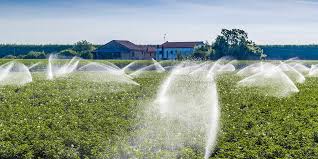
For agricultural operations, estates with landscaping, and commercial green spaces, engineered irrigation — including drip irrigation, sprinkler systems, and water-efficient delivery — both conserves water and improves outcomes compared to manual or unmanaged watering.
Flood Control and Water Resources Planning
For larger sites, estates, or communities, this involves broader planning: understanding a site’s hydrology, managing runoff at scale, and designing infrastructure that accounts for how water moves across an entire property or development, not just a single building.
How to Evaluate a Water Engineering Company in Nigeria
- Ask about the breadth of their in-house capability. A company that can genuinely handle supply, treatment, drainage, and irrigation under one roof eliminates the coordination gaps that come from juggling multiple specialist contractors.
- Insist on proper site assessment before any design work. Whether it’s a hydrogeological survey for a borehole or a topographic assessment for drainage, credible water engineering starts with understanding the site, not with a generic off-the-shelf solution.
- Ask for water quality testing where relevant. Any project involving drinking water, agricultural use, or wastewater discharge should include testing as a matter of course, not an optional add-on.
- Review completed projects, ideally in person. A borehole that’s been reliably producing water for years, or a drainage system that’s held up through several rainy seasons, tells you far more than a proposal document.
- Check for engineering credentials. Look for COREN-registered engineers on the team and a company with proper registration — water infrastructure is not a category where informal, unqualified operators should be trusted with your budget.
- Ask how the system will be maintained. Water infrastructure — pumps, filters, drainage channels, treatment systems — all require ongoing maintenance. A company that disappears after installation leaves you without support when something eventually needs attention.
- Get a detailed, itemized proposal. Vague lump-sum pricing makes it difficult to understand what you’re actually paying for and to compare quotes meaningfully between providers.
Common Mistakes in Nigerian Water Projects
- Treating water supply and drainage as separate, unrelated problems, when in reality a comprehensive water strategy should consider both together, especially on estate-scale developments.
- Skipping site assessment to save time, leading to poorly positioned boreholes, undersized drainage, or systems that don’t match actual site conditions.
- Ignoring water treatment and quality testing, particularly risky for sites near industrial activity or with known groundwater contamination concerns.
- Underdesigning drainage systems, a leading cause of flooding damage to Nigerian estates and commercial properties during the rainy season.
- Hiring based on price alone, without verifying engineering credentials or reviewing completed work — a costly gamble given how expensive water infrastructure failures are to fix after the fact.
- No maintenance plan, leaving pumps, filters, and drainage systems to degrade without the periodic servicing that keeps them functioning reliably for years rather than months.
Water Engineering for Different Project Types
Residential: Typically centers on a borehole, basic treatment if needed, and a simple drainage plan around the building — smaller in scope but still benefiting from proper site assessment.
Estates and residential developments: Requires integrated planning across water supply reticulation, wastewater treatment or septic systems, and estate-wide drainage — this is where the coordination benefits of a single water engineering partner are most valuable, since dozens or hundreds of units all depend on the same underlying infrastructure working correctly.
Agricultural and agribusiness: Centers on water supply capacity, irrigation system design, and sometimes water treatment for processing operations, sized for the scale of the farming or agribusiness operation.
Commercial and institutional: Hotels, schools, hospitals, and factories typically need higher-capacity water supply and treatment, along with wastewater systems designed for continuous, higher-volume use than a typical residential project.
Why Irrigrow Civil & Engineering
Irrigrow Civil & Engineering delivers water engineering services across Nigeria as part of a broader civil engineering and construction practice — an approach built around the idea that water supply, drainage, and irrigation should be planned together, not handled by disconnected specialists. Our water engineering services include:
- Hydrogeological assessment and borehole drilling for reliable water supply
- Water supply reticulation and storage design for homes, estates, and commercial sites
- Drainage and stormwater management engineered for Nigeria’s rainy-season conditions
- Irrigation system design and installation for agricultural land, estates, and landscaped commercial properties
- Integration of water engineering with the broader civil works and construction on your site, so infrastructure is planned holistically from the start rather than retrofitted after the fact
Because our water engineering work sits inside a full civil engineering and construction practice, clients get one accountable team managing everything from site grading and drainage to the borehole, reticulation, and irrigation that keep a property supplied and protected for years to come.
Frequently Asked Questions
What does a water engineering company do? A water engineering company designs and delivers systems for water supply, treatment, drainage, wastewater management, and irrigation — covering everything from a residential borehole to estate-wide reticulation and stormwater systems.
How is water engineering different from just drilling a borehole? Borehole drilling is one component of water engineering. A full water engineering company also handles water treatment, drainage and stormwater management, wastewater systems, and irrigation — a broader scope that matters especially for estates, farms, and commercial developments.
Why does drainage fall under water engineering? Drainage and stormwater management are fundamentally about controlling how water moves across and off a site — the same engineering discipline that governs water supply and treatment, just applied to managing excess water rather than delivering needed water.
Do I need a water engineering company for a single residential borehole? Even a single borehole benefits from proper hydrogeological assessment and, where relevant, water quality testing — services that a qualified water engineering company provides as standard practice, unlike informal drilling operators.
How do I know if a water engineering company is qualified? Look for CAC business registration, COREN-registered engineers, a track record of completed projects you can review or visit, and a company willing to conduct proper site assessment before proposing a solution.
Need water supply, drainage, or irrigation engineered properly for your property, farm, or development? [Contact Irrigrow Civil & Engineering] for a site assessment and detailed quote.
water engineering company in Nigeria
water engineering company in Nigeria
water engineering company in Nigeria