Cost-Effective Building Materials for Construction in Nigeria
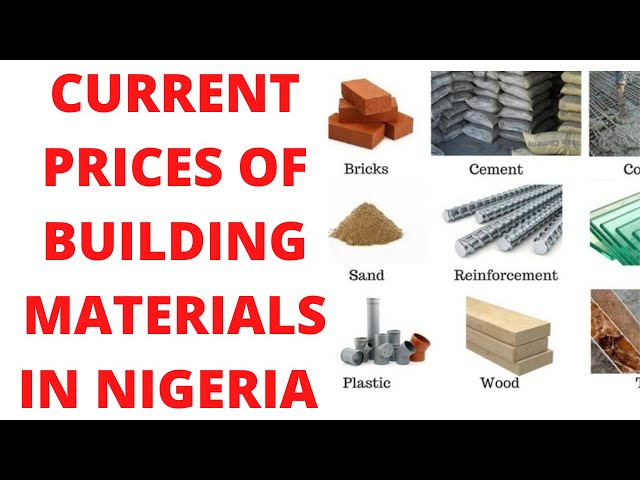
Cost effective building materials for construction in Nigeria:The Building Materials industry in Nigeria plays an important role in economic development, housing provision, infrastructure growth, and job creation. However, the rising cost of construction has become one of the major challenges facing homeowners, developers, contractors, and investors across the country. The prices of cement, reinforcement steel, roofing materials, timber, sand, granite, blocks, tiles, plumbing materials, and other construction inputs can significantly increase the total cost of a building project.
For a construction company such as Irrigrow Construction, achieving affordability does not simply mean selecting the cheapest materials available. A truly cost-effective construction strategy involves choosing materials that provide a good balance between purchase price, durability, availability, transportation cost, maintenance requirements, labour requirements, environmental performance, and structural suitability.
Recent studies in Nigeria have highlighted the potential of locally available materials such as laterite, aggregates, timber, bamboo, reeds, rice husk ash, clay, and other agricultural by-products. A 2025 study of building materials in the Federal Capital Territory found aggregates, timber, laterite and bamboo among the most readily available local materials, while also noting that many of these resources remain under utilised.
For Irrigrow Construction, the opportunity is therefore not only to reduce the immediate cost of construction but also to promote building methods that are practical, durable, locally appropriate, and sustainable.
cost effective building materials for construction in Nigeria
Cost-effective building materials construction in nigeria should not be confused with cheap construction. Cheap construction focuses mainly on reducing the initial expenditure, whereas cost-effective construction considers the total cost of owning and maintaining a building over its useful life.
For example, choosing a very inexpensive roofing material may appear to reduce construction costs. However, if the material deteriorates quickly and requires frequent replacement, the homeowner may eventually spend more than if a moderately priced, durable material had been selected from the beginning.
Similarly, reducing the quantity or quality of cement, reinforcement steel, concrete, blocks, or other structural components without proper engineering assessment can create serious safety problems. Therefore, Irrigrow Construction should always ensure that cost reduction takes place through efficient design, proper material selection, reduced waste, local sourcing, good workmanship, and effective project management, rather than compromising structural integrity.
Construction material prices in Nigeria remain volatile. Available 2026 market guides, for example, show significant variation in prices for cement, reinforcement steel, sandcrete blocks, roofing sheets, timber and other materials depending on location and supplier. This makes accurate bills of quantities and current supplier quotations particularly important before construction begins.
- Laterite and Stabilised Earth Blocks
Laterite is one of the most promising locally available materials for affordable construction in Nigeria. It is naturally abundant in many parts of the country and can be processed into compressed earth blocks or stabilised earth blocks.
Laterite-based blocks can reduce dependence on conventional sandcrete blocks when they are properly designed, produced, tested and used in suitable applications. Research on sustainable wall materials in Nigeria has also investigated laterite stabilised with cement and other locally available materials as a potential affordable and environmentally friendly walling solution.
One major advantage of laterite is its local availability. When the material can be obtained close to the construction site, transportation costs may be reduced. This is particularly important because transporting heavy construction materials over long distances can add substantially to project costs.
Laterite blocks can also provide useful thermal characteristics. Properly designed earth-based walls can help moderate indoor temperatures, potentially reducing dependence on mechanical cooling in some building types.
However, laterite should not simply be excavated and used without testing. Its composition varies from one location to another. Stabilisation, moisture protection, block production quality, curing and appropriate construction detailing are essential.
For Irrigrow Construction, laterite can therefore be considered as part of an affordable walling strategy where site conditions, engineering requirements and applicable standards permit its use.
- Locally Produced Sandcrete Blocks
Sandcrete blocks remain one of the most common walling materials in Nigeria. Their popularity is largely due to their availability, familiarity among builders and relatively straightforward production process.
Although sandcrete blocks are conventional materials, they can still contribute to cost-effective construction when they are sourced intelligently. Irrigrow Construction can reduce costs by purchasing blocks from reputable local manufacturers close to the project site, thereby reducing transportation expenses.
Quality control is extremely important. Poorly manufactured blocks may crack, break during transportation or require excessive mortar and plastering. Such defects can increase project costs rather than reduce them.
The company should therefore prioritise suppliers that consistently produce blocks with appropriate dimensions, strength and curing. The cheapest block should not automatically be selected. A slightly more expensive but stronger and better-manufactured block may provide better value because it reduces breakage and rework.
- Locally Sourced Aggregates
Aggregates are essential for concrete, foundations, floors, drainage systems and other construction activities. Nigeria has significant sources of natural aggregates, and a 2025 assessment of local materials in the FCT ranked aggregates as the most readily available among the materials considered.
For Irrigrow Construction, sourcing aggregates from reliable quarries close to construction sites can help control costs. The company should also establish relationships with reputable suppliers to obtain competitive rates and consistent quality.
Aggregate size and grading should be appropriate for the intended application. Using the wrong aggregate or poorly graded materials can result in poor concrete performance, excessive cement consumption or unnecessary waste.
Proper storage is also important. Aggregates should be stored in a way that prevents contamination and excessive mixing between different sizes.
- Bamboo
Bamboo is another locally available material with potential for cost-effective construction. It grows rapidly and can be found in different parts of Nigeria. A recent assessment of materials available in the FCT ranked bamboo highly in both availability and reported utilisation.
Bamboo can be used in selected applications such as temporary structures, scaffolding, screens, decorative features, ceilings, furniture, partitions and, where properly engineered and treated, certain structural applications.
Its light weight can make transportation and handling easier than heavier materials. Bamboo is also renewable and can contribute to sustainable construction.
However, untreated bamboo can be vulnerable to insects, moisture and deterioration. Consequently, proper selection, treatment, detailing and maintenance are essential.
Irrigrow Construction can explore bamboo particularly for architectural features, landscaping, temporary works and other applications where its technical suitability has been established. Structural use should be based on competent engineering design rather than simply assuming that bamboo can replace steel or reinforced concrete in every situation.
- Timber from Responsible Local Sources
Timber is widely used in Nigerian construction for roofing structures, doors, windows, formwork, furniture, ceilings and other applications. In the FCT study, timber ranked among the most readily available local building materials.
Using locally sourced timber can reduce transportation expenses and support Nigerian businesses and workers. However, cost-effective timber selection requires attention to species, strength, moisture content, treatment and intended use.
For roofing, for instance, the timber must be capable of carrying the required loads. Using weak or poorly treated timber simply because it is cheaper can lead to premature deterioration.
Properly treated timber can provide long service life and reduce maintenance costs. Irrigrow Construction should also encourage responsible sourcing to reduce unnecessary environmental damage.
- Rice Husk Ash and Other Agricultural By-Products
Nigeria has a large agricultural sector that produces significant quantities of agricultural waste. Some of these wastes can be processed into useful construction materials or supplementary materials.
Rice husk ash is one example. Research into locally available materials in Abuja identified rice husk ash among the materials with potential for construction use.
Depending on its properties and processing, agricultural ash can potentially be incorporated into certain construction products or cementitious applications. Other agricultural fibres and residues, including palm-related materials, coconut fibres and similar resources, have also attracted attention as possible components of sustainable building materials.
The important point is that agricultural waste should not automatically be regarded as a structural material. Its use should be based on appropriate testing and engineering evaluation. Nevertheless, the opportunity for future innovation is considerable.
- Cement: Reduce Waste Rather Than Compromise Quality
Cement remains an essential construction material for foundations, concrete, mortar, plastering and many other applications. Because cement is relatively expensive and its price can fluctuate, reducing unnecessary cement consumption can have a significant impact on project costs.
The objective should not be to use poor-quality cement or reduce cement content below engineering requirements. Instead, Irrigrow Construction can reduce costs through:
Accurate measurement and batching.
Proper concrete mix design.
Avoiding excessive mortar thickness.
Preventing cement spoilage through proper storage.
Ordering quantities based on realistic calculations.
Reducing rework caused by poor workmanship.
Using suitable supplementary cementitious materials where technically approved.
Proper storage is particularly important because cement exposed to moisture can deteriorate before use, turning a purchased material into waste.
- Affordable Roofing Materials
Roofing can represent a substantial portion of building expenditure. Current Nigerian construction cost guides indicate that roofing material prices vary significantly depending on material type, thickness, location and supplier.
For cost-effective construction, Irrigrow Construction should consider the entire roofing system rather than focusing only on the price per sheet.
Long-span aluminium roofing can reduce the number of overlaps and joints required compared with smaller sheets, potentially reducing installation time and some labour requirements. However, the appropriate thickness and specification should be selected according to the project’s requirements.
The roof design itself also affects cost. A simple roof with an efficient geometry can require less timber, roofing material and labour than an unnecessarily complicated design.
Good roof detailing is equally important because water leakage can create significant maintenance expenses. A slightly higher initial investment in proper flashing, gutters, fasteners and waterproofing details can prevent expensive repairs later.
- Floor Finishes and Wall Finishes
Finishes can easily become an area of unnecessary expenditure. Imported or premium tiles, decorative wall panels and elaborate ceilings may significantly increase the cost of a building without necessarily improving its functionality.
Irrigrow Construction can offer clients different finishing levels based on their budgets. Standard locally available tiles can be used in areas where premium finishes are unnecessary. Cement screed, polished concrete and other practical finishes may also be considered where appropriate.
The same principle applies to painting. Good surface preparation can improve the appearance and durability of paintwork while reducing the likelihood of premature peeling or repeated repainting.
Affordable construction should therefore focus on functional beauty—creating attractive spaces through good design and workmanship rather than relying entirely on expensive imported finishes.
- PVC and Locally Available Plumbing Materials
Plumbing is another area where material selection can affect the total cost of a project. PVC and related plastic piping products are commonly used in Nigerian buildings because they are relatively lightweight, easy to transport and straightforward to install.
However, the cheapest plumbing fittings are not necessarily the most economical. Inferior pipes or fittings can fail, resulting in leaks, water damage and expensive repairs.
Irrigrow Construction should select plumbing products based on the pressure, temperature, drainage or water-supply requirements of each application. Proper installation and testing should also be carried out before walls and floors are closed.
- Cost Reduction Through Good Design
One of the most effective ways to reduce construction costs is to reduce unnecessary complexity in the building design.
A well-designed building can minimise material waste by using standard dimensions and efficient room layouts. Repetitive structural elements can also simplify construction and reduce labour requirements.
For example, a building designed around commonly available block sizes, doors, windows, roofing sheets and timber dimensions may generate less cutting and waste than a design filled with unusual dimensions.
This means that affordability should begin at the architectural and engineering design stage—not after construction has already started.
- Local Sourcing and Transportation
Transportation is often overlooked when calculating the cost of building materials. A material that is inexpensive at the point of production may become expensive when transported over a long distance.
Irrigrow Construction can improve cost efficiency by identifying reliable suppliers close to project locations. This approach can reduce transportation expenses, delivery delays and the risks associated with long-distance handling.
Local sourcing also has wider economic benefits. It supports local businesses, creates employment and keeps more construction expenditure within Nigerian communities.
- Reducing Construction Waste
Waste reduction is one of the simplest ways to make construction more affordable. Materials are often wasted through poor measurement, careless handling, incorrect cutting, over-ordering and inadequate storage.
Irrigrow Construction can establish site procedures for:
Accurate material measurement.
Controlled material delivery.
Secure storage.
Reuse of suitable off-cuts.
Regular inventory checks.
Proper supervision of workers.
Immediate correction of workmanship problems.
A small percentage of material savings across many projects can result in substantial financial benefits for both the contractor and the client.
- Balancing Initial Cost and Long-Term Value
A cost-effective building should remain functional and durable for many years. Therefore, Irrigrow Construction should help clients distinguish between initial cost and life-cycle cost.
For example, a cheaper window that deteriorates quickly may ultimately cost more than a moderately priced, durable window. The same principle applies to roofing, plumbing, electrical installations, doors, paints and structural components.
Clients should therefore be presented with options showing the advantages and disadvantages of different material choices.
- Quality Control and Professional Supervision
No building material can deliver good results if it is poorly installed. Skilled labour and professional supervision are therefore essential components of cost-effective construction.
Poor workmanship can result in cracked walls, leaking roofs, failed plumbing systems, defective concrete, uneven floors and other problems. Correcting these problems after construction is usually more expensive than doing the work properly the first time.
Irrigrow Construction should therefore maintain quality-control procedures throughout each project. Materials should be inspected when delivered, workmanship should be monitored, and important construction stages should be checked before the next stage begins.
cost effective building materials for construction in Nigeria requires a strategic combination of appropriate materials, good design, local sourcing, quality control, efficient construction methods and responsible project management. The goal should never be to compromise safety or durability in the pursuit of a lower initial price.
Materials such as laterite, stabilised earth blocks, locally produced sandcrete blocks, aggregates, timber, bamboo and selected agricultural by-products offer opportunities for reducing construction costs when they are properly assessed and applied. Studies in Nigeria have demonstrated that many locally available materials remain underutilised despite their availability and potential economic benefits.
For Irrigrow Construction, embracing cost-effective materials can become an important part of a broader strategy for delivering affordable and sustainable buildings to Nigerian clients. By sourcing materials locally where practical, reducing waste, simplifying designs, investing in skilled workmanship and selecting materials according to performance rather than price alone, the company can help clients achieve buildings that are both affordable and durable.
Ultimately, the future of affordable construction in Nigeria will depend not on finding one single replacement for conventional building materials, but on developing a balanced construction approach that combines modern engineering with Nigeria’s abundant local resources. With proper research, testing, professional design and quality control, cost-effective materials can contribute significantly to the delivery of safe, attractive, sustainable and accessible buildings across Nigeria.
For Irrigrow Construction, the message is clear: cost reduction should mean smarter construction—not inferior construction.
:::