Cost of Irrigation Setup in Nigeria. Irrigation farming is becoming increasingly important in Nigeria as farmers seek better ways to improve crop production, reduce dependence on rainfall, and achieve year-round farming. With changing weather conditions, irregular rainfall patterns, and increasing food demand, irrigation systems are now considered a major investment for modern agriculture.
At Irrigrow Civil & Engineering Ltd, we understand that one of the biggest concerns for farmers, agribusiness investors, and farm owners is the actual cost of installing an irrigation system in Nigeria.
The truth is that irrigation setup costs vary depending on several factors such as the type of irrigation system, farm size, water source, crop type, terrain, and installation materials.
This guide explains everything you need to know about irrigation setup costs in Nigeria, the different irrigation systems available, factors affecting pricing, and how to plan a successful irrigation project.
What is Irrigation?
Irrigation is the artificial application of water to farmland for crop production. Instead of relying solely on rainfall, irrigation systems supply water directly to crops in controlled quantities.
Irrigation allows farmers to:
- Farm during dry seasons
- Improve crop yields
- Reduce crop stress
- Increase farming efficiency
- Achieve year-round production
- Improve profitability
Modern irrigation systems are widely used for:
- Vegetable farming
- Greenhouse farming
- Fruit farming
- Maize cultivation
- Rice farming
- Plantation agriculture
- Nursery production
Why Irrigation is Important in Nigeria
Nigeria has vast agricultural potential, but many farmers still depend heavily on rainfall. Irrigation helps solve many agricultural challenges.
1. Dry Season Farming
Irrigation enables farmers to cultivate crops during dry periods when rainfall is unavailable.
2. Improved Crop Yield
Proper irrigation significantly improves crop growth and productivity.
3. Better Water Management
Modern irrigation systems reduce water wastage and improve efficiency.
4. Increased Farm Income
Farmers can produce more crops annually and take advantage of off-season market prices.
5. Climate Change Adaptation
Irrigation helps farmers cope with irregular rainfall and climate variability.
Types of Irrigation Systems in Nigeria
Different irrigation systems are used depending on farm size, crop type, budget, and water availability.
1. Drip Irrigation System
Drip irrigation is one of the most efficient irrigation methods available today.
It supplies water directly to plant roots through drip lines and emitters.
Benefits of Drip Irrigation
- Saves water
- Reduces weed growth
- Improves fertilizer efficiency
- Reduces disease spread
- Suitable for vegetables and orchards
Cost of Drip Irrigation in Nigeria
The cost of drip irrigation setup in Nigeria varies depending on farm size and system quality.
Industry estimates show that one-acre drip irrigation installations commonly range from approximately ₦250,000 to over ₦1.5 million depending on materials, installation complexity, and automation level.
Some standard one-acre vegetable irrigation kits in Nigeria are sold within the ₦450,000 to ₦600,000 range.
Factors affecting drip irrigation cost include:
- Farm size
- Quality of drip tapes
- Water source
- Pump requirements
- Filtration system
- Automation level
- Installation labor
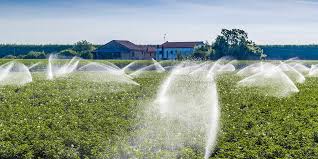
2. Sprinkler Irrigation System
Sprinkler irrigation distributes water through sprinklers that spray water over crops like rainfall.
It is commonly used for:
- Maize farms
- Lawns
- Pasture
- Wheat farms
- Sports fields
Advantages
- Covers large areas
- Suitable for different crops
- Uniform water distribution
Estimated Cost
Sprinkler irrigation systems are generally more expensive for large commercial farms because they require pumps, pipes, sprinklers, and pressure systems.
The total setup cost depends on:
- Number of sprinklers
- Pipe network
- Pump size
- Water pressure requirements
3. Surface Irrigation
Surface irrigation involves distributing water across farmland using gravity.
This method is commonly used for:
- Rice farming
- Flood irrigation
- Large open fields
Advantages
- Lower setup cost
- Simple operation
Challenges
- Higher water wastage
- Less efficient
- Requires proper land leveling
4. Center Pivot Irrigation
Center pivot irrigation uses rotating sprinkler systems to irrigate large farmland.
This system is popular for large commercial agriculture projects.
Benefits
- Covers large farmland
- Reduces labor
- Highly automated
Cost Implication
Center pivot systems are expensive and usually suitable for industrial-scale farming operations.
Factors Affecting Irrigation Setup Cost in Nigeria
Several important factors determine the final cost of irrigation installation.
1. Farm Size
The larger the farmland, the higher the installation cost.
More land requires:
- More pipes
- More drip lines
- Larger pumps
- More labor
- Additional water infrastructure
2. Type of Irrigation System
Drip irrigation, sprinkler systems, and pivot systems all have different installation costs.
Advanced automated systems generally cost more.
3. Water Source
The source of water affects project cost significantly.
Water sources may include:
- Boreholes
- Rivers
- Dams
- Reservoirs
- Water tanks
Additional infrastructure such as pumps and storage tanks may increase expenses.
4. Pumping System
Irrigation systems often require pumps for water distribution.
Pump costs depend on:
- Farm size
- Water pressure
- Distance
- Elevation
Solar-powered irrigation systems may cost more initially but reduce long-term energy expenses.
5. Filtration System
Filters are essential for drip irrigation systems because they prevent blockage of emitters and drip lines.
High-quality filtration systems improve system lifespan.
6. Terrain and Land Condition
Rocky or uneven land may increase installation costs due to excavation and land preparation.
7. Automation Level
Automated irrigation systems with sensors, timers, and fertigation units cost more than manual systems.
Estimated Irrigation Setup Cost in Nigeria
Below is a general estimate of irrigation installation costs in Nigeria.
| Irrigation Type | Estimated Cost Range |
|---|---|
| Small drip irrigation setup | ₦250,000 – ₦800,000 |
| One-acre drip irrigation system | ₦450,000 – ₦1.5 million |
| Medium commercial irrigation project | ₦2 million – ₦10 million |
| Large-scale irrigation project | ₦10 million – ₦100 million+ |
Actual costs depend on project specifications and installation requirements.
Components of an Irrigation System
A complete irrigation system may include:
- Water pump
- Pipes
- Drip tapes
- Sprinklers
- Filters
- Water tanks
- Valves
- Fertigation units
- Controllers
- Pressure regulators
Each component contributes to the total installation cost.
Cost of Borehole for Irrigation
Many irrigation systems in Nigeria depend on boreholes for water supply.
Borehole installation costs vary depending on:
- Depth
- Location
- Geological condition
- Pump size
Combining borehole installation with irrigation setup increases the total project budget.
Solar Irrigation System Cost in Nigeria
Solar irrigation is becoming increasingly popular because of rising fuel and electricity costs.
Solar irrigation systems typically include:
- Solar panels
- Inverter
- Pump
- Batteries (optional)
Benefits
- Reduced fuel costs
- Environmentally friendly
- Suitable for remote farms
Challenges
- Higher initial investment
Maintenance Cost of Irrigation Systems
Irrigation systems require regular maintenance for efficient operation.
Maintenance expenses may include:
- Pipe replacement
- Pump servicing
- Filter cleaning
- Drip tape replacement
- Leak repairs
Proper maintenance increases system lifespan and efficiency.
Benefits of Irrigation Farming
1. Increased Productivity
Farmers achieve better yields due to controlled water supply.
2. All-Season Farming
Irrigation allows farming throughout the year.
3. Water Efficiency
Modern systems such as drip irrigation reduce water wastage.
4. Higher Profitability
Farmers can produce crops during off-season periods when prices are higher.
5. Better Crop Quality
Controlled irrigation improves crop health and market quality.
Challenges of Irrigation Farming in Nigeria
Despite its benefits, irrigation farming also has some challenges.
High Initial Investment
Irrigation systems require significant capital.
Technical Knowledge
Farmers need proper training to manage irrigation systems effectively.
Maintenance Requirements
Regular maintenance is necessary to prevent system failure.
Power Supply Issues
Electric pumps may be affected by unstable electricity supply.
How to Reduce Irrigation Setup Cost
Start Small
Farmers can begin with smaller systems and expand gradually.
Use Quality Materials
Cheap irrigation materials may fail quickly and increase maintenance costs.
Work with Professionals
Professional irrigation companies help reduce costly installation mistakes.
Proper Farm Planning
Good planning improves efficiency and reduces unnecessary expenses.
Why Drip Irrigation is Popular in Nigeria
Drip irrigation is widely preferred because it delivers water directly to crop roots while minimizing waste.
It is especially suitable for:
- Tomatoes
- Cucumbers
- Pepper
- Onion
- Greenhouse farming
- Orchard farming
Many Nigerian farmers are adopting drip irrigation because of its efficiency and profitability.
Choosing the Right Irrigation System
Before selecting an irrigation system, farmers should consider:
- Farm size
- Crop type
- Budget
- Water availability
- Soil condition
- Technical expertise
Professional consultation is important before installation.
Why Choose Irrigrow Civil & Engineering Ltd
Irrigrow Civil & Engineering Ltd specializes in agricultural engineering and irrigation solutions in Nigeria.
Our services include:
- Drip irrigation installation
- Greenhouse construction
- Borehole systems
- Agricultural infrastructure
- Farm water systems
- Smart farming solutions
- Commercial irrigation projects
We provide customized irrigation solutions tailored to your farm size, crop type, and budget.
Conclusion
Irrigation farming is transforming agriculture in Nigeria by enabling farmers to produce crops efficiently throughout the year.
The cost of irrigation setup in Nigeria depends on factors such as farm size, irrigation type, water source, automation level, and installation materials.
Although irrigation systems require substantial initial investment, the long-term benefits often outweigh the costs through increased productivity, better crop quality, and higher farm income.
Drip irrigation remains one of the most efficient and widely adopted irrigation systems in Nigeria because of its water-saving advantages and suitability for vegetable farming.
At Irrigrow Civil & Engineering Ltd, we are committed to helping farmers and agribusiness investors achieve sustainable agricultural success through professional irrigation installation and engineering solutions.
For irrigation setup, greenhouse projects, and agricultural infrastructure development, partnering with experienced professionals is essential for long-term farming success. irrigation